


Ask the Builder: Thinking About a Sea Change? What to Consider Before You Move

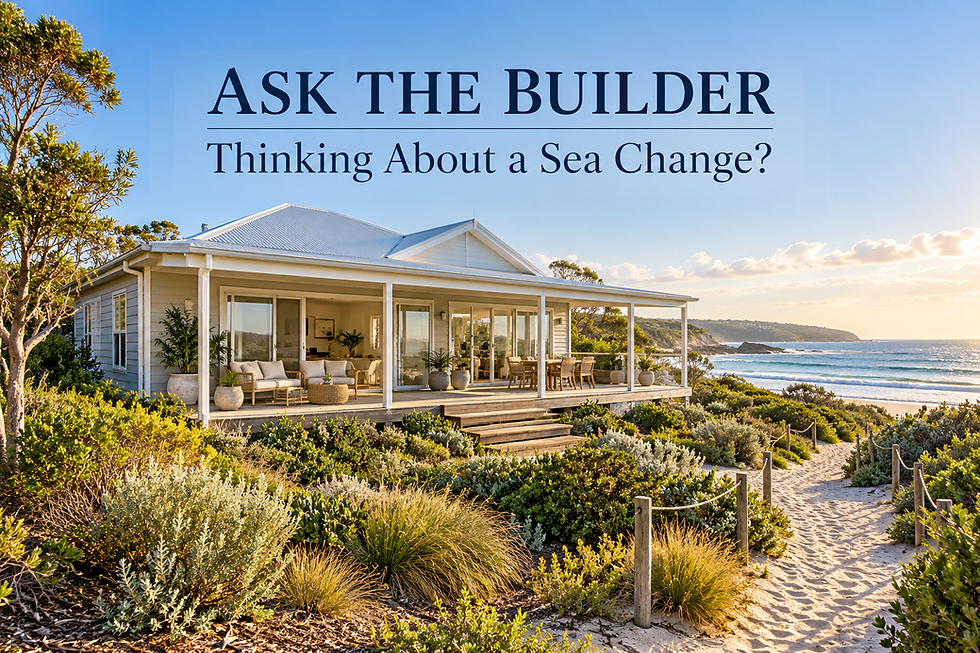
A home near the beach can be a wonderful change of pace. Before you make the move, take time to understand the property, the community and the practical realities of coastal living.
For many Australians, a sea change means morning walks on the beach, fresh ocean air and a more relaxed lifestyle. Whether you’re planning to retire, work remotely or raise a family near the coast, there is plenty to love about living by the water.
But a place that feels perfect during a beach holiday may be different when you live there throughout the year. Summer crowds, salt air, insurance costs and access to health services are just some of the things worth considering before you buy.
Here are 12 practical tips to help you plan a sea change you’ll enjoy for the long term.
1. Visit Outside the Holiday Season
A coastal town can have a very different feel in January compared with a quiet winter weekday.
During the holidays, you may find busy beaches, full cafés and lots of activity. In the off-season, the same area might be quieter, with some businesses operating reduced hours.
Try to visit:
During and outside school holidays.
On weekdays as well as weekends.
In winter and summer, if possible.
During wet or windy weather.
At the times you would normally shop or travel.
Think about whether you would enjoy the town in both its busiest and quietest periods.
2. Rent Before You Buy
If you’re moving to an area you don’t know well, renting for a few months can help you decide whether it suits your everyday life.
You may discover that you prefer a quieter suburb away from the waterfront, or that being close to shops and medical services matters more than having an ocean view.
Renting gives you time to learn about:
Traffic and parking during peak season.
Which neighbourhoods feel right for you.
Local noise and activity.
The distance to shops, doctors and other services.
How the area feels outside holiday periods.
If a longer rental isn’t practical, consider staying for a few weeks at different times of the year before making a decision.
3. Check Health Services and GP Access
A beautiful beach is a bonus, but access to healthcare is an important part of planning a move—particularly if you have regular appointments or ongoing health needs.
Contact local medical practices before you relocate and ask whether they are accepting new patients and how appointments are booked.
Depending on your circumstances, you may also want to investigate:
The nearest hospital and emergency department.
Pharmacies.
Specialists.
Pathology and medical imaging.
Dental care.
Physiotherapy and other allied health services.
Community and in-home support.
Consider how far you would need to travel for regular treatment, not just the distance to the nearest medical centre.
4. Understand the Effects of Salt Air
Living close to the ocean can mean more maintenance than you might expect. Salt carried in the air can contribute to corrosion and affect exposed materials and fittings over time.
When inspecting a property, look carefully at:
Metal roofing and gutters.
Balustrades and outdoor stairs.
Window and door hardware.
Garage doors.
Air-conditioning units.
Outdoor lighting and fixtures.
Fencing, gates and fasteners.
Ask about the age and maintenance history of these items, and consider a professional building inspection before buying.
Ask the Builder tip: When building or renovating near the coast, discuss suitable materials, finishes and maintenance requirements with your builder and product suppliers. The right choices depend on the property’s location and exposure.
5. Look Beyond the Ocean View
A water view can be a major attraction, but it shouldn’t be the only reason you choose a home.
Consider how the house works for your daily life:
Is the living area comfortable throughout the year?
Does the home receive useful natural light?
Is there shade from the hot afternoon sun?
Are outdoor areas sheltered from strong winds?
Can you get from the car to the front door easily?
Is there enough storage for beach gear, bikes and visitors?
Can you manage the stairs and garden as your needs change?
A practical, comfortable home a little farther from the water may suit you better than a property chosen mainly for its outlook.
6. Check Flooding, Erosion and Other Property Risks
Coastal locations can be affected by different hazards depending on the property and surrounding area.
Before buying, investigate relevant information about:
Flooding and stormwater.
Coastal erosion.
Storm surge.
Strong winds and storm damage.
Drainage around the home.
Access during severe weather.
Check available property information with the local council and relevant authorities, and seek professional advice where needed. Ask questions about the specific property rather than relying on general information about the town.
It’s also sensible to obtain an insurance quote before making a commitment.
7. Find Out What Insurance and Maintenance Will Cost
A coastal property may come with ongoing costs that differ from those of your current home.
Before buying, ask your insurer for a quote based on the actual property and the cover you need. Check the policy details, exclusions and excesses carefully.
You should also budget for the upkeep of:
External paint and finishes.
Roofs and gutters.
Decks and outdoor structures.
Metal fixtures and hardware.
Windows and doors.
Air-conditioning equipment.
Gardens and landscaping.
If you’re considering a unit or townhouse, review the relevant ownership and building documents, including fees, maintenance plans and any known repair work.
8. Try the Drive at the Times You’ll Use It
Moving to the coast doesn’t always mean leaving traffic behind. Popular beach towns can become congested during holiday periods, and access to larger centres may take longer than expected.
If you’ll be travelling regularly for work, family, shopping or medical appointments, test the route:
On a weekday.
During school drop-off and pick-up times.
On a busy weekend or holiday.
During wet weather, where practical.
In both directions.
Also consider whether you’ll be comfortable making that journey regularly, particularly as your circumstances change.
9. Check Mobile Coverage and Internet
Even in established coastal towns, reception and internet availability can vary between streets and properties.
Test mobile reception inside the home, particularly in the rooms where you would make calls or work. Check the services available at the exact address and ask the current occupants about reliability.
This is especially important if you:
Work from home.
Attend online appointments.
Run an online business.
Use video calls to keep in touch with family.
Rely on internet-connected security or home systems.
If a reliable connection is essential, consider what alternative you would use during an outage.
10. Think About Visitors and Holiday Crowds
One of the pleasures of a sea change can be welcoming family and friends to visit. But it’s worth thinking about how visitors will fit into your new lifestyle.
Consider whether you need:
A spare bedroom or flexible guest space.
An extra bathroom.
Parking for visitors.
An outdoor area for entertaining.
Storage for beach and outdoor equipment.
At the same time, think about the effect of peak-season crowds. Ask yourself whether you are comfortable with busier roads, parking restrictions and more activity in your street during holidays.
11. Consider the Home You’ll Need in the Future
A sea change is often a long-term decision, so think beyond the first year in your new home.
A property with steep stairs, a sloping driveway or a large garden may be manageable now but less convenient later.
Look at whether the home offers:
Easy access from parking to the entry.
A bedroom and bathroom on the main living level.
Practical doorways and circulation space.
A low-maintenance garden.
Good natural ventilation.
Shelter from sun, rain and wind.
Enough space for changing family needs.
A well-planned home can make coastal living more comfortable at every stage of life.
12. Check Your Building and Renovation Plans
If you’re buying land or an older home with plans to build or renovate, check what is possible before you purchase.
Depending on the location and property, there may be requirements or constraints affecting the design and approval process.
Questions to explore include:
Where can a new home, extension or shed be positioned?
Are there height limits or setback requirements?
Are there flood, coastal or environmental constraints?
Are there easements or other restrictions on the land?
What approvals may be required?
Will the design provide suitable protection from sun, wind and weather?
Contact the local council and speak with suitable design and building professionals about the specific property.
Ask the Builder tip: Before spending money on detailed plans, confirm that your main ideas are practical for the site and investigate any property constraints that could affect the design.
Your Sea Change Checklist
Before making the move, ask yourself:
Have I visited during both busy and quiet times?
Would renting locally first help me make a better decision?
Have I checked access to doctors, hospitals and other services?
Do I understand the maintenance needs of a coastal home?
Have I investigated relevant property risks?
Have I obtained an insurance quote?
Is the home comfortable and practical beyond its view?
Have I tested the journeys I’ll make regularly?
Have I checked mobile reception and internet at the address?
Will the home still suit me as my needs change?
Make Your Sea Change Work for You
A sea change can be a rewarding way to start a new chapter. The key is to look beyond the holiday feeling and consider how the location and home will support your everyday life.
Take your time, visit more than once and ask plenty of questions. With a clear understanding of the costs, property and local services, you can make a more confident decision about your move to the coast.
Planning a coastal home? Explore design ideas and floor plans at Australian Floor Plans.



Comments